
Your customers  searched for
  you. A scammer paid to get there first
Fraud Studio monitors and disrupts fake websites impersonating your brand through paid search.
We autonomously scan Google, Bing, and Yahoo ads for copycat sites designed to scam customers, steal credentials, or sell counterfeits. When we find one, we flag it, block it and take it down.
The problem
Fraudsters are using the trust you've built against you.
They’re buying ads against your brand keywords, and sending customers to websites designed to look like yours. Those sites are used to:
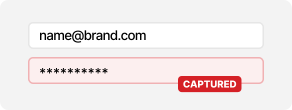
Steal usernames and passwords
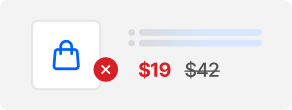
Sell counterfeit products
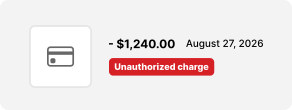
Scam customers out of money
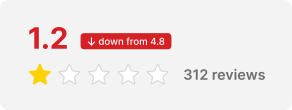
Shred trust in your brand
Steal usernames and passwords
Sell counterfeit products
Scam customers out of money
Damage trust in your brand
The solution
We find the impersonators. Then we take action.
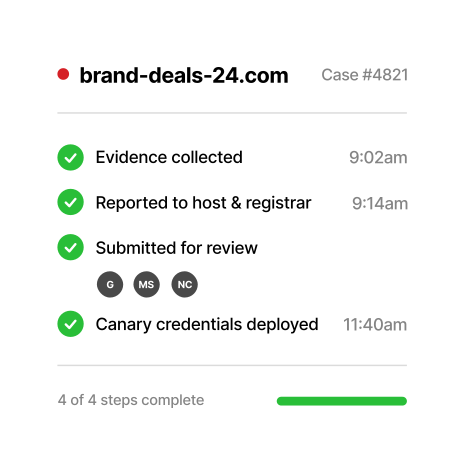
When we identify a fraudulent site, we:
- Detect: 24/7 monitoring of ad auctions, new domain registrations, and lookalike SSL certs.
- Dismantle: automatic takedowns filed to hosts, registrars and blocklists
- Devalue: poisoning the stolen data
We make fraud expensive to run.
For security and fraud teams
Built for the operational side of fraud prevention.
What we run:
- Paid-search monitoring
- Pattern-based scoring
- Abuse reports
- Blocklist submissions
- Data poisoning
We don’t just surface suspicious sites.
We work to disrupt them.
How it works
A process that gets sharper the more you tell us.
Show us what you’ve seen.
We collect examples of past fraud or impersonation sites targeting your brand.
We build your fraud profile.
We use those examples to build triggers that help us automatically score and flag suspicious sites.
We sharpen the search.
Details matter. Who saw the ad? Where were they? What device were they using? The more context you provide, the more targeted our searches can become.
We investigate and act.
When we find a credible impersonation site, we collect the evidence and work through the relevant channels to get it flagged, blocked, or taken down.
Is fraud studio a fit?
We're built for companies dealing with active impersonation.
E-commerce brands with recognizable names
Fraudsters are posing as your brand to sell counterfeit products or scam customers.
Websites with customer logins
Attackers are creating lookalike sites designed to steal credentials.
Teams seeing the same problem repeatedly
New fake sites keep appearing, and you need a systematic way to find and disrupt them.
E-commerce
brands
Customer
logins
repeat
offenders

The nitty gritty
Focused on paid-search impersonation.
TLDR; Meta ads are too highly targeted to reliably surface, so our monitoring is focused on search-ad channels.
We monitor:
Google ads
Bing ads
Yahoo ads
We don’t currently monitor:
Facebook or Instagram ads
Organic search
Social media
Phishing disruption
For phishing sites, we can go beyond takedown requests.
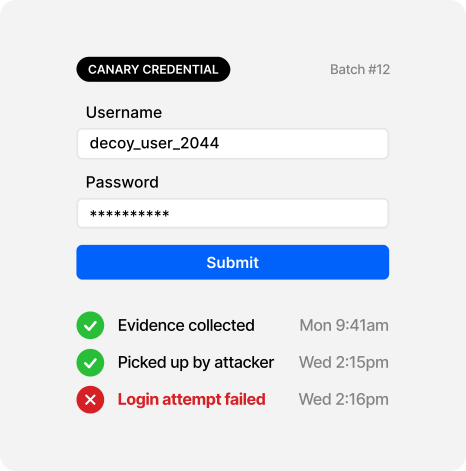
When appropriate, we can coordinate with your internal team to create controlled canary or decoy credentials and submit them through the fraudulent site.
The goal is to slow the attacker down or overwhelm the operation while other disruption efforts are underway.

Make yourself a hard target.
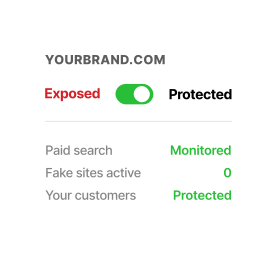
Fake sites are targeting your customers right now. We find them, take them down, and make what they steal worthless.
Faq's
How do you get a fake website taken down?
When we identify a fraudulent site impersonating your brand, we investigate and collect evidence, then report it to the hosting provider and domain registrar. In parallel, we submit it to Google Safe Browsing, Microsoft SmartScreen, and Netcraft so browsers can warn visitors before a full takedown completes. Pursuing multiple channels at once shortens the time the site can operate.
What is paid-search brand impersonation?
Paid-search brand impersonation is when a fraudster buys search ads on your brand’s name or keywords, then sends clicks to a fake website built to look like yours. These sites are used to steal login credentials, sell counterfeit products, or scam customers directly — borrowing the trust your brand has already built. Because the ad looks legitimate, customers rarely question the destination until it’s too late.
Do you monitor Facebook, Instagram, or social media ads?
No. Fraud Studio focuses on paid-search channels — Google, Bing, and Yahoo ads — where brand-keyword impersonation is easiest to systematically detect. Meta ads are too tightly audience-targeted to reliably surface through outside monitoring, and we don’t currently cover organic search or social media impersonation.
What happens if a phishing or fake site can’t be fully taken down right away?
A full takedown can take time, since it depends on hosting providers and registrars acting on abuse reports. While that’s in progress, a Google Safe Browsing listing can still protect customers: anyone clicking the ad sees a red “deceptive site” warning before reaching the fake page. It’s one of several disruption paths running at once, not a replacement for takedown.
What are canary or decoy credentials, and how do they stop phishing?
For phishing sites built to steal logins, we can coordinate with your internal team to create canary or decoy credentials — fake but trackable logins — and submit them through the fraudulent site. Flooding the attacker’s operation with decoy data can slow it down or make stolen credentials unreliable, disrupting the attack while other takedown efforts continue.